
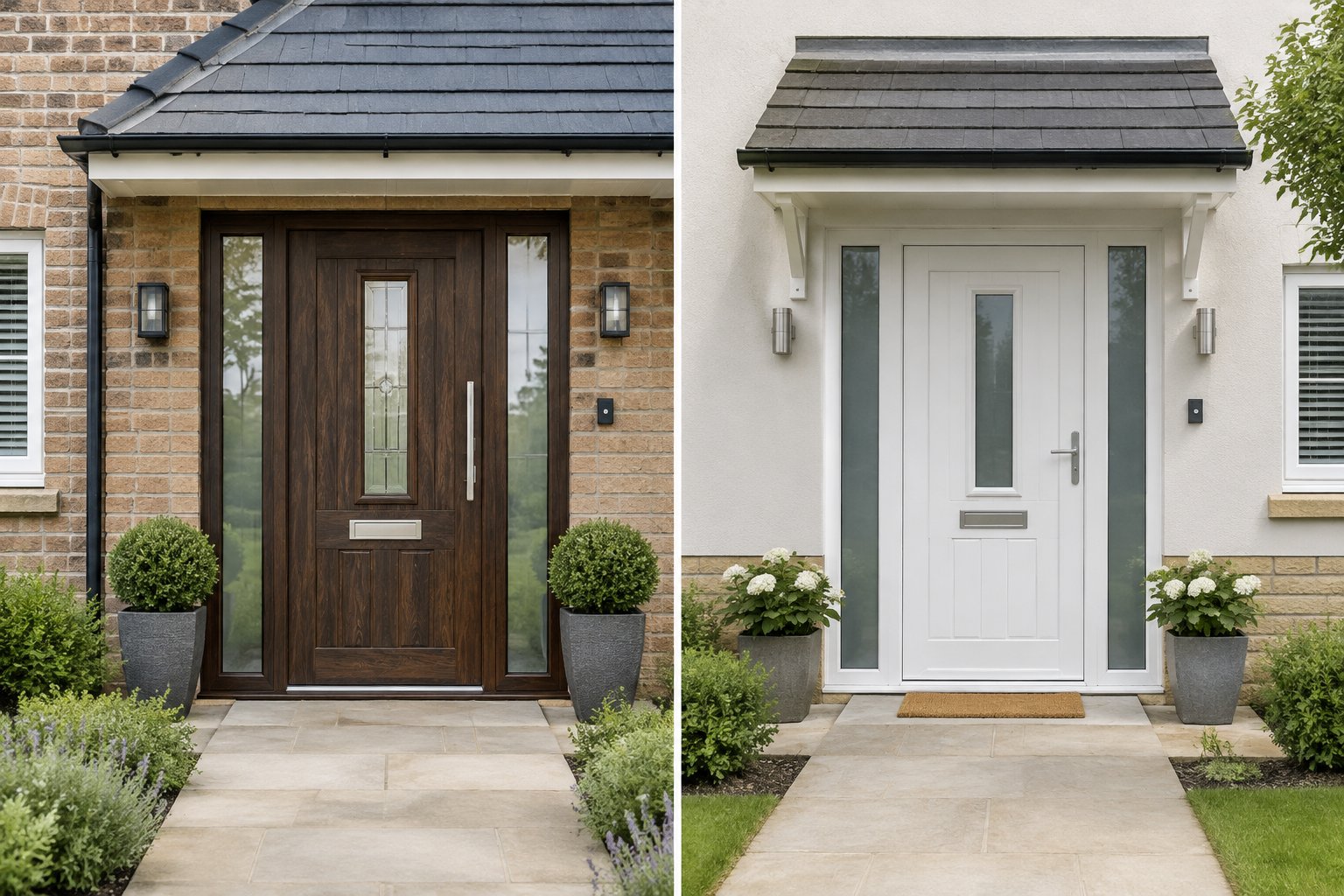
Choose composite doors for a sturdy build and more design choices, or uPVC doors if you’re prioritising a lower upfront cost and simple upkeep. The best option for you depends on your budget, your entrance and the features of each door.
When comparing composite and uPVC doors, look at the whole package. Locks, frames, seals and fitting all affect security and warmth, so compare tested ratings, fitted prices and guarantees as well as appearance.
Key Takeaways
- Composite doors cost more upfront and offer more design choices.
- Both materials offer low-maintenance doors.
- Check security ratings, insulation and installation quality.
The Main Benefits and Trade-Offs at a Glance
Composite doors have a thicker build and more wood-effect finishes, while uPVC doors tend to cost less upfront. Your choice also comes down to tested security, thermal efficiency and how well the door is fitted.
Where Composite Doors Typically Have the Edge
Composite doors bring together materials such as timber, insulating foam and a tough outer skin. They’re typically thicker and more rigid than standard uPVC models, which helps them withstand knocks and everyday wear.
For kerb appeal, there’s a wide choice of colours, woodgrain finishes and traditional panel designs. They suit homes where you want the look of a painted timber entrance without quite so much upkeep.
Insulated cores help with thermal efficiency, but it’s worth comparing each door’s energy rating. You’ll pay more upfront, and dark finishes need extra care on entrances exposed to strong sunlight. Check the manufacturer’s guidance and warranty, then clean the surface and care for locks and hinges as directed.
When uPVC Offers Better Value
uPVC doors make sense if you need a practical entrance on a limited budget. Standard white designs usually cost less than composite doors, leaving more room in your budget for secure locks, suitable glazing and professional fitting.
Upkeep is straightforward: wash the frame and panels with mild soapy water, and maintain moving parts as the manufacturer advises. uPVC resists rot and doesn’t need painting.
For a back or side entrance, a simpler design can save you money. Compare the full fitted price, including removal of your old door and any repairs around the frame.
Check the insulation and security ratings for the exact model. Panel thickness, reinforcement, glazing and seals all affect how it performs.
Side-by-Side Comparison of Key Features
When comparing quotes, use figures and specifications for the complete door, frame and glass included.
| Feature | Composite doors | uPVC doors |
|---|---|---|
| Upfront cost | Usually higher | Lower for basic designs |
| Build | Mixed materials with a protective outer skin | Plastic frame and panels, with reinforcement varying by model |
| Thermal efficiency | Insulated cores help limit heat loss | Insulated panels and tight seals help retain heat |
| Kerb appeal | Broad choice of colours and textured finishes | Simple white designs, plus coloured and wood-effect options |
| Upkeep | Cleaning and hardware care | Cleaning and hardware care |
For security, ask whether either door type has PAS 24 testing and suitable locks. For warmth, compare whole-door U-values: lower figures mean less heat passes through the door. Check warranty terms and fitting costs before ordering.
Materials and Construction Explained
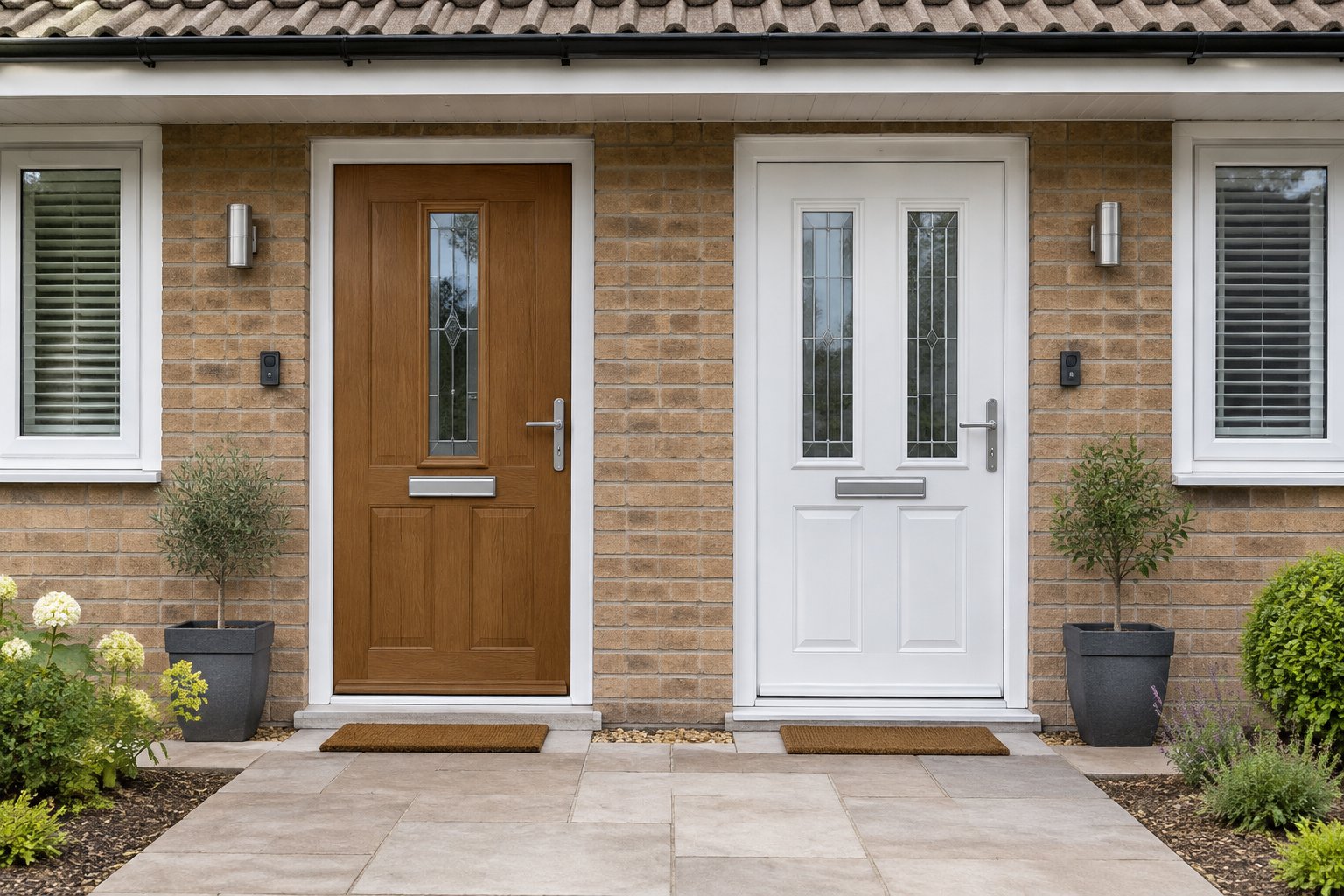
The door’s core, outer surface and frame all contribute to its strength and insulation. Thickness matters, but so do the materials, reinforcement, seals and quality of fitting.
Composite Cores, Outer Skins and Frames
A composite door brings several materials together. The core usually contains rigid insulating foam or timber, and some designs combine the two. Foam helps limit heat loss, while timber adds weight and strength.
Many composite doors have a GRP (glass-reinforced plastic) outer skin. This tough surface protects the core from the weather and allows for a moulded woodgrain finish, so the door can look like timber without needing the same routine upkeep. Other designs use different outer layers, so check the specification.
The frame matters too. Manufacturers use materials such as reinforced uPVC, timber or aluminium. Secure hinges, strong lock fixings and well-fitted seals help the door and frame work together.
uPVC Profiles, Insulated Panels and Reinforcement
A uPVC door uses rigid plastic sections around an insulated panel, glass, or a combination of both. Inside, the sections have chambers that trap air and help reduce heat transfer. The solid panel commonly contains insulating foam between protective outer sheets.
Steel or aluminium reinforcement in selected frame and door sections adds stiffness and supports hinges and locks. Ask your supplier where the reinforcement goes, especially if you’re choosing a large door or substantial glazing.
Panel quality also affects strength and insulation. Check the panel material, glazing specification and how the frame holds everything in place. These details matter just as much as the uPVC sections themselves.
Why Door Thickness Alone Does Not Determine Performance
Composite door slabs are often around 44mm thick, though some designs are thicker. uPVC infill panels are frequently around 28mm, but sizes vary. These measurements refer to different parts of the construction, so check exactly what your supplier is measuring.
For insulation, compare the whole-door U-value, which measures heat passing through the complete door, including the frame and glazing. A lower number means less heat loss. The core material, glass, seals and fitting all affect the result.
For security, ask whether your chosen door assembly meets PAS 24, a UK security test standard. Check the lock cylinder, hinges and frame fixings, too. Even a thick door needs sound hardware and correct installation to protect your entrance.
Upfront Costs and Long-Term Value
uPVC doors usually cost less, with standard fitted prices around £800–£1,500. Your long-term costs also depend on glazing, locks, repairs and how long the door lasts.
Indicative UK Supply-and-Fit Prices
These ranges can give you a starting point for your budget:
| Door type | Indicative supply-and-fit price |
|---|---|
| Standard uPVC external door | £800–£1,500 |
| Standard composite front door | £1,100–£2,500+ |
Your quote will vary with your location, door design and installation work. Check whether the price includes VAT, the frame, fitting, removal of your old door and waste disposal.
If your installer needs to repair brickwork or alter the opening, allow extra for labour and materials. Side panels will increase the total, too.
Get at least three written quotes for the same size and features. It makes prices easier to compare, particularly if one installer includes fitting extras that another charges separately.
How Glazing, Hardware and Bespoke Sizes Affect Quotes
Your choice of glass affects the price. Decorative patterns, etched finishes and triple glazing add to the cost, while glazed side panels increase both material and fitting costs.
Ask for the whole-door U-value, which measures heat loss. A lower figure means better insulation, and the glass is part of that rating.
Locks and handles can change your quote as well. Premium handles, letterplates, smart locks and cylinders designed to resist snapping add to the total. Check which security features are included in the base price before choosing upgrades.
You’ll usually pay more for a made-to-measure door that’s outside standard sizes. Give each installer the same requirements, and ask them to measure the opening before you order.
Balancing Purchase Price, Repairs and Replacement
For budgeting, expect uPVC doors to last roughly 20–35 years and composite doors around 30–35 years or more. Product quality, weather exposure and fitting all affect how long your door stays in good condition.
Both need cleaning, seal checks and care for moving parts. Follow the maker’s instructions for lubricating locks and hinges. You may need to replace handles, seals or locking parts before the door itself needs replacing.
Check the warranty terms for the door, finish, glass, hardware and installation. Each part may have a different cover period.
A composite front door’s extra cost doesn’t guarantee savings within ten years. Compare purchase and upkeep costs over your planned ownership period, and estimate heating savings using the whole-door U-value and the condition of your existing door.
Security Depends on the Complete Doorset
Your front door’s security depends on the door leaf, frame, locks, glazing and fixings working together. For either a composite or uPVC door, check the complete doorset’s test evidence, cylinder protection and fitting requirements.
PAS 24 Testing and Secured by Design Accreditation
PAS 24 sets minimum security requirements for doorsets, with tests assessing resistance to forced entry. The tests cover the assembled door, including its frame, locks and any glazing.
Ask your supplier for independent certification covering the exact model and specification you plan to buy. Make sure your chosen size, glass and hardware fall within the approved range. Both composite and uPVC doorsets can achieve PAS 24 certification.
Secured by Design is a police-backed security scheme. When choosing your door, check whether the specific product holds Police Preferred Specification status. Verify its listing through the scheme’s product directory, and ask your supplier to confirm that your order matches the approved specification.
Multi-Point Locking and Cylinder Protection
A multi-point locking system secures your door at several positions along the frame. Hooks and bolts engage with matching metal fittings called keeps. Their strength, position and secure fixing all affect the level of protection.
For the lock cylinder, look for a TS 007 3-star cylinder designed to protect against snapping and other attacks. Another recognised option pairs a TS 007 1-star cylinder with 2-star protective handles or cylinder guards. Ask your supplier to confirm the complete setup.
Check that the cylinder projects no further than the manufacturer allows beyond its protective hardware. Follow the locking instructions whenever you leave, including lifting the handle if required. Report stiffness or missed locking points promptly so your installer can correct the alignment.
The Importance of Frames, Glazing and Installation
Your frame must hold the hinges and lock keeps securely. Ask your installer to follow the manufacturer’s fixing requirements, including the correct screws, spacing and support for your wall construction.
If you choose a glazed door, check that the glass and retaining system match the tested doorset specification. Laminated security glass has a layer that holds broken pieces together and helps resist entry. Confirm its security rating with your supplier.
Keep these checks on your installation list:
- Your door closes without catching or needing force.
- Every point on your multi-point lock engages fully.
- Your installer secures the frame and checks the hinges.
- You receive the keys, care instructions and certification details.
Arrange adjustments promptly if your door drops or the lock becomes difficult to use.
Thermal Efficiency and Weather Protection
Your door’s insulation, seals and fit all affect heat loss and draughts. When choosing between composite and uPVC front doors, compare verified whole-door figures, weather test results and installation details.
Comparing Verified Whole-Door U-Values
A lower U-value means less heat passes through your door. Manufacturers express this figure in W/m²K. For example, a door rated at 1.0 loses less heat through its surface than one rated at 1.4 under the same conditions.
Ask your supplier for a verified whole-door U-value that includes the frame and glass. Check that the supporting calculation or test report matches your chosen size, glazing and design.
A composite door’s foam or timber-based core provides insulation, while a uPVC door uses insulated panels and chambers within its frame. Either way, efficiency depends on the complete design. Compare figures for the exact products you plan to buy, as glass area and frame design affect the result.
How Seals, Thresholds and Fitting Prevent Draughts
Your door needs continuous seals around its edges to keep cold air out. The hinges and lock must hold the door evenly against these seals, with no gaps at the corners.
Ask your installer how they’ll seal the frame to the wall and protect the threshold from rain. A low threshold makes access easier, but check its weather rating if your entrance is exposed.
For either a composite or uPVC door, request these checks:
- Weather test results: Ask for air leakage, watertightness and wind resistance ratings.
- Drainage: Keep drainage holes clear so water can escape.
- Final adjustment: Check that your door closes firmly without needing force.
Realistic Energy Savings and Sound Insulation
Your savings depend on the door you’re replacing, its size, your heating use and energy prices. Replacing a draughty, poorly insulated door offers more scope for savings than replacing a modern door that’s already well sealed.
Be cautious with fixed annual savings claims. Before using one to judge value, ask what starting U-value, heating costs and air leakage assumptions support the estimate.
For sound insulation, ask for a tested Rw rating, measured in decibels (dB), for the complete door. A higher figure means better sound reduction under test conditions.
Your seals, glazing and letterplate also affect noise entry. A heavy composite door on its own doesn’t guarantee a quieter hallway; check the tested specification and fitting quality.
Lifespan, Maintenance and Common Problems
Your composite or uPVC door needs regular cleaning, sound seals and working locks to reach its expected lifespan. Sun exposure, fitting quality and surface finish all affect how well it ages.
Expected Service Life Versus Warranty Length
Expect around 20–30 years from a quality uPVC door and 30–35 years from a composite door, depending on construction, exposure and care. These are estimates, but they’re useful when planning your budget.
Your warranty will cover a shorter period than the door’s expected life. Some suppliers offer ten-year cover, with separate terms for the door slab, finish, glass and hardware.
Before you buy, check:
- Parts and labour: Does the cover include fitting replacement parts?
- Exclusions: What rules apply to fading, movement and maintenance?
- Responsibility: Who handles claims, the installer or manufacturer?
Your handles, hinges and locking parts may need replacing before the door itself. Keep your receipt, warranty and maintenance record in case you need to make a claim.
Cleaning, Lubrication and Seal Replacement
Wash your door and frame with warm water, mild soap and a soft cloth. Use a soft brush on textured composite surfaces, then rinse away dirt and dry the finish.
Avoid abrasive pads, solvents and pressure washers. Check the maker’s instructions before applying polish or coating to a uPVC or GRP (glass-reinforced plastic) surface.
Lubricate your hinges and locking points with the product the manufacturer recommends. Your lock cylinder may need a different lubricant from the hinges, so check its instructions separately.
Inspect your seals for cracks, flattened sections and gaps, especially if you notice draughts or water. Clean drainage openings and replace damaged seals with the correct profile. Unlike a painted timber door, a composite or uPVC door doesn’t need routine repainting.
Sun Exposure, Fading, Expansion and Warping
Your door expands as it heats up and contracts as it cools. Dark finishes absorb more heat, so a south-facing entrance can increase the risk of temporary sticking or changes in the gaps around the frame.
A uPVC finish may fade, while a decorative foil could lift or peel as it ages. Composite doors have weather-resistant outer skins, but their colour and surface condition still depend on the product and its exposure.
A composite door’s layered construction helps it hold its shape, though some movement is still possible. Check the supplier’s rules for exposed entrances and dark colours before ordering.
If your door starts catching, don’t force the handle. Ask your installer to check the alignment, hinges and frame fixing before adjusting anything yourself.
Appearance and Kerb Appeal
Your door’s colour, surface finish and glazing shape your home’s kerb appeal. Composite and uPVC front doors come in traditional and modern designs, though planning rules could limit your choice in protected properties.
Colours, Woodgrain Finishes and Glazing Styles
With a composite front door, you can choose a smooth surface or a moulded woodgrain finish that copies the texture of timber. Colours include white, black, grey, green and blue, with some suppliers offering custom shades.
Your uPVC options include smooth white, coloured finishes and woodgrain foils. A foil is a thin decorative layer bonded to the surface. Ask to see samples outdoors; daylight makes differences in texture and sheen easier to judge.
With either material, you can choose clear, patterned or frosted glass, as well as decorative leaded designs. Check privacy from the street, particularly after dark with your hall light on. Ask whether the supplier offers different colours for the inside and outside faces.
Matching Traditional and Contemporary Homes
For a period home, you can match panel shapes, glass patterns and door furniture to its age. A woodgrain composite door with recessed panels suits many Victorian or Edwardian entrances. Simple uPVC panel designs can work in some traditional homes too, depending on the frame proportions and finish.
For a contemporary home, consider a smooth surface, simple glazed panels and a plain handle. Both materials offer these features, but designs vary by supplier.
Your frame matters as much as the door panel. Compare its width, threshold and glazing bars with your existing entrance. View a full-size sample if possible, and check how the colour works with your brickwork, render and window frames before ordering.
Planning Constraints for Listed Buildings and Conservation Areas
If your home is listed, replacing an external door may require listed building consent, particularly if the change affects its historic character. Ask your local planning authority before ordering. It may require you to repair the existing timber door or use a matching timber replacement.
In a conservation area, check whether an Article 4 direction restricts changes to front doors. These directions remove specified permitted development rights, so your replacement might need planning permission. Rules vary across the UK.
Give your planning officer photographs and details of your proposed material, colour, panels and glazing. A woodgrain finish alone won’t guarantee approval. Get any required consent before paying a deposit or removing your existing door.
Installation Quality and Buying Checks
Your door’s fit, threshold and seals affect security, weather protection and thermal efficiency. Before ordering, agree on the survey details, compliance paperwork and written specification.
Surveying the Opening, Threshold and Access Requirements
Ask your installer to measure the opening’s width, height and diagonals, and inspect the surrounding brickwork. Your composite or uPVC door needs suitable fixings, a square frame and enough space for fitting and sealing.
Check the threshold against your floor levels, outside paving and drainage. A low threshold can help with wheelchair or pushchair access, but an exposed entrance still needs a suitable weather seal.
During the survey, confirm:
- Clear opening width: Check the usable gap when the door is open.
- Opening direction: Make sure there’s clearance for stairs, furniture and nearby doors.
- Finishing work: Include frame removal, waste disposal and repairs to plaster or render.
Ask who’ll repair hidden damage if removing the old frame reveals rotten timber or loose masonry.
Checking Applicable Building Regulations and Installer Certification
Check the rules for your UK nation, as building regulations differ across England, Wales, Scotland and Northern Ireland. Requirements depend on the building, location and scope of work.
Ask your installer which requirements apply to energy performance, ventilation, access and safety glazing. If you’re replacing a flat entrance door, check its fire and smoke protection requirements with your building manager before ordering.
Check certification before paying a deposit. In England and Wales, FENSA or CERTASS registration can support self-certification for eligible replacement glazing work. Scheme coverage depends on the work, including the door’s glazed area.
Ask whether your installation qualifies and which certificates you’ll receive. Where security rules require PAS 24, request evidence covering your chosen door, frame, glazing and hardware.
Comparing Written Specifications, Guarantees and Lead Times
Get itemised quotes based on the same specification. Compare the complete installed price, including VAT, locks, handles, glazing, threshold, removal and finishing work.
Ask for the whole-door U-value, which measures heat loss through the complete door assembly. A lower figure means better thermal efficiency. Check that the quoted value applies to your chosen size and glazing.
Check the product guarantee separately from the installer’s workmanship cover. Read the terms for locks, hinges, seals, surface finish and glass, including maintenance duties and claim costs.
Confirm the delivery estimate, fitting date and deposit terms in writing. Ask how the supplier handles delays, damaged parts and temporary security, and keep your quote, order confirmation, certificates and guarantee documents together.
Choosing the Right Door for Each Entrance
Your front door needs to suit your home’s style and stand up to daily use. For rear and side entrances, consider cost, weather exposure and security before choosing between composite and uPVC doors.
Main Entrances Where Appearance and Durability Matter
A composite front door gives you a textured, timber-style finish with little upkeep. Its layered construction adds strength, while the range of colours, glazing and panel designs makes it easier to match your home’s style.
If your front door faces strong sun or driving rain, check the manufacturer’s warranty for that position. Dark finishes absorb more heat, and some manufacturers set conditions for exposed entrances.
Compare the insulation rating for the whole door, including the frame and glass. A lower U-value means less heat loss. Ask your installer about weather seals and threshold options, too, especially if you need step-free access. Good fitting helps prevent draughts and keeps the door opening smoothly.
Rear Entrances, Utility Rooms and Garage Side Doors
uPVC doors are a lower-cost option for a back entrance or utility room. Their wipe-clean surfaces suit muddy gardens and busy laundry spaces, while glazed panels bring daylight into darker rooms.
Choose glass with privacy in mind. If the door is close to a boundary or public path, patterned glass limits views inside. Ask for safety glazing where required, and suitable security glazing for accessible panels.
Treat your garage side door as a security priority, especially if the garage connects to your house or holds valuable tools. Specify a reinforced frame, a multi-point locking system and a suitable anti-snap cylinder. Check that the door suits the opening and leaves enough clearance for bins, bikes or garden equipment.
A Final Checklist Based on Budget, Exposure and Security
Before ordering, compare written quotes for the same size, glass, locks and fitting work. As a rough UK budget, allow £800–£1,500 for fitted uPVC doors and £1,100–£2,500 or more for composite doors.
Check these details against your entrance:
- Budget: Confirm whether your quote includes VAT, removal, disposal and repairs around the frame.
- Exposure: Check warranty terms for direct sun, coastal conditions and driving rain.
- Security: Look for independently tested performance, such as PAS 24, alongside strong locks and secure fitting.
- Daily use: Test the handle, threshold height and opening width.
- Aftercare: Ask who handles lock adjustments, seal replacement and warranty claims.
Frequently Asked Questions
Your choice affects the upfront cost, insulation, security and upkeep of your entrance. uPVC doors cost less, while composite doors have a thicker structure and a wider choice of finishes.
What are the main differences between composite and uPVC external doors?
A composite door combines materials, such as a timber or foam core with a tough outer skin. A uPVC door has a rigid plastic frame around insulated panels, with reinforcement in key areas.
Composite doors cost more and offer a solid feel with wood-effect finishes. uPVC is a lower-cost option that’s easy to clean.
Are composite doors more secure than uPVC doors?
A well-made composite door can resist impact well thanks to its layered structure. Security also depends on the frame, locks, hinges and fitting quality.
For either material, look for a complete door and frame tested to PAS 24, a UK security standard. Choose a suitable anti-snap lock cylinder and professional installation.
Which offers better thermal insulation: composite or uPVC doors?
Composite doors often provide better insulation through their thicker cores. Energy-efficient uPVC doors are available too, so compare the figures for each product.
Check the whole-door U-value, which measures how much heat passes through the door. A lower number means better insulation; good seals and correct fitting also help keep draughts out.
How much do composite doors cost compared with uPVC doors in the UK?
For a standard replacement including fitting, budget roughly £800–£1,500 for uPVC and £1,200–£2,500 for composite. The price depends on size, glazing, locks and local labour costs.
Premium designs and side panels add to the price. Check whether your quote includes VAT, removal of your old door and repairs around the frame.
How long do composite and uPVC doors last, and what maintenance do they need?
As a rough planning guide, expect 20–30 years from uPVC and 25–35 years from composite. Your door’s quality, exposure and upkeep all affect its lifespan.
Clean either door with mild soapy water and a soft cloth. Follow the maker’s instructions for lubricating locks and hinges, and check seals and drainage holes regularly.
Which is better at withstanding British weather: composite or uPVC doors?
Both types can protect your home from rain and wind, provided you choose a well-made door with sound seals. Composite doors generally stand up better to dents and surface wear.
Strong sunlight can affect either material, causing expansion and possible colour changes over time. If your entrance is exposed, check the weather-test ratings for your chosen door and review the warranty terms.